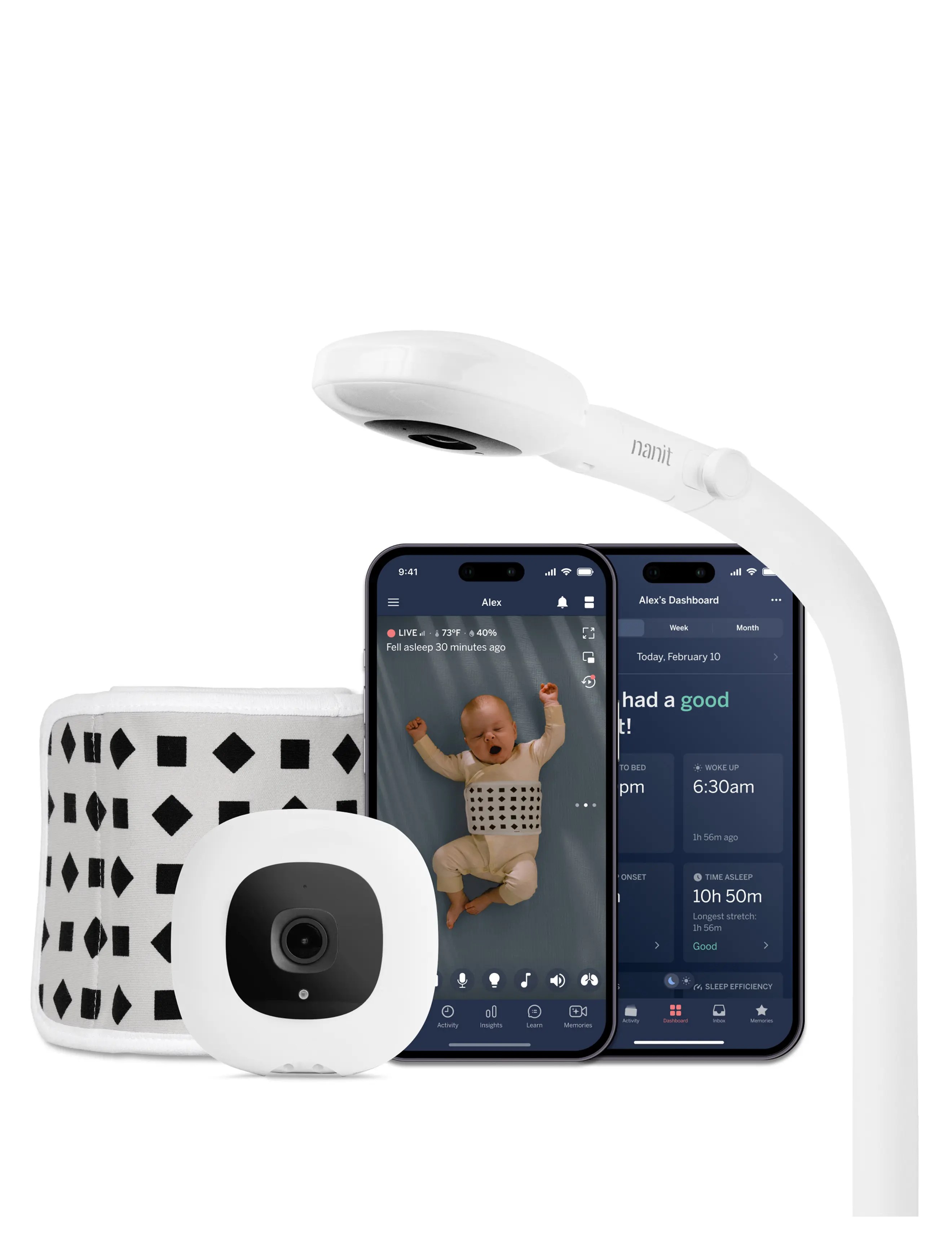
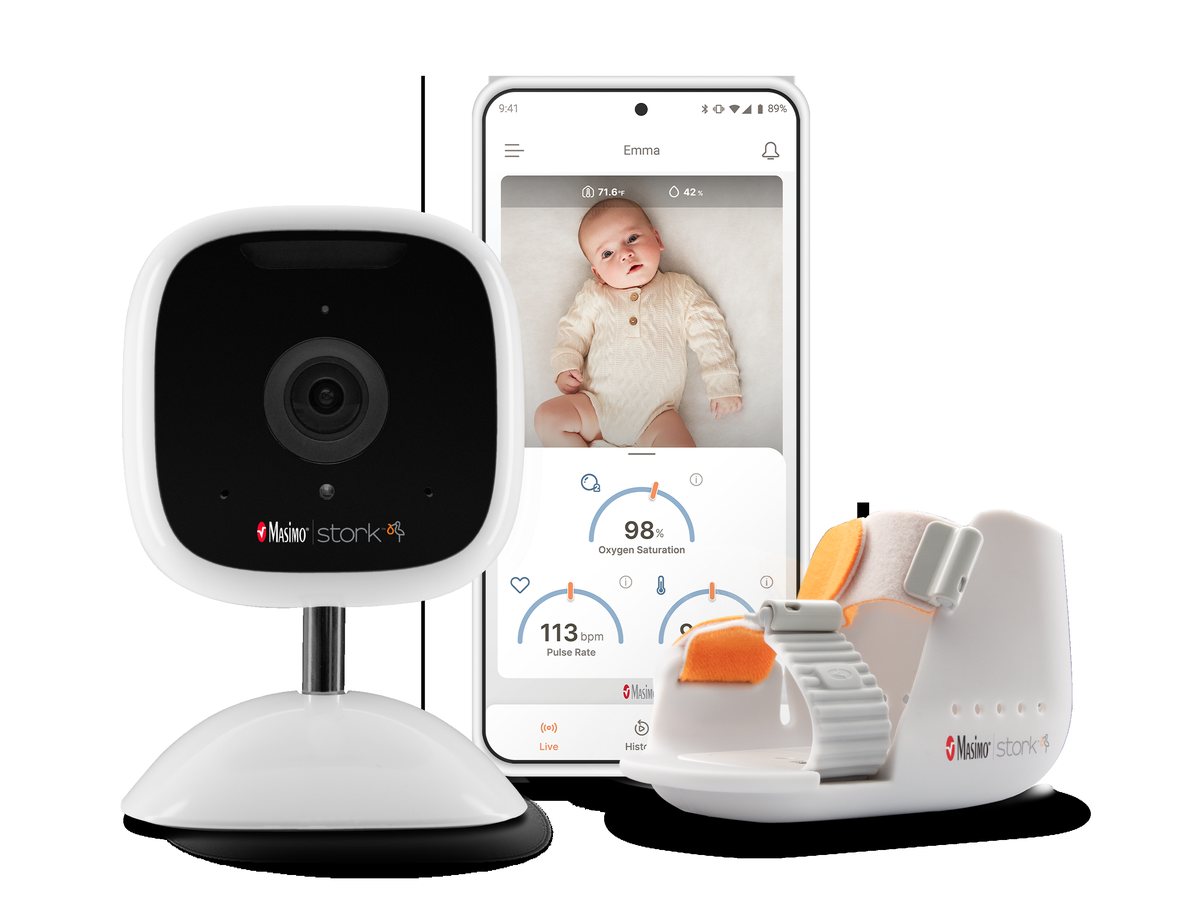
 The Stork Vitals+ camera, boot and app (brand photo)
Monitors & Sound · Check #276
Is the Masimo Stork Vitals+ worth it?
Masimo Stork Vitals+
The FDA clearance was real — Masimo SET pulse oximetry cleared for healthy infants 0–18 months — but Masimo discontinued the Stork, its Android app was pulled in June 2026 and the app the whole system runs through was reported shut off after June 30, 2026, so the $449 Vitals+ still on shelves cannot monitor anything.
See current price ↗The pitch
Hospital Masimo SET® pulse oximetry in a soft silicone boot — continuous oxygen saturation, pulse rate and skin temperature with FDA-cleared alarms for healthy infants from day one, plus a 2K QHD camera, from the maker whose sensors are used in NICUs
The catch
Masimo discontinued the Stork and shut its app down in 2026 — and the boot, camera and alarms all run through that app, so any Stork bought today is a monitor that cannot monitor; the clearance was also narrower than the marketing: healthy infants only, and the face-down alert was never cleared
FSA/HSA
eligible per retailer listings — moot now, since the system no longer functions
What it is
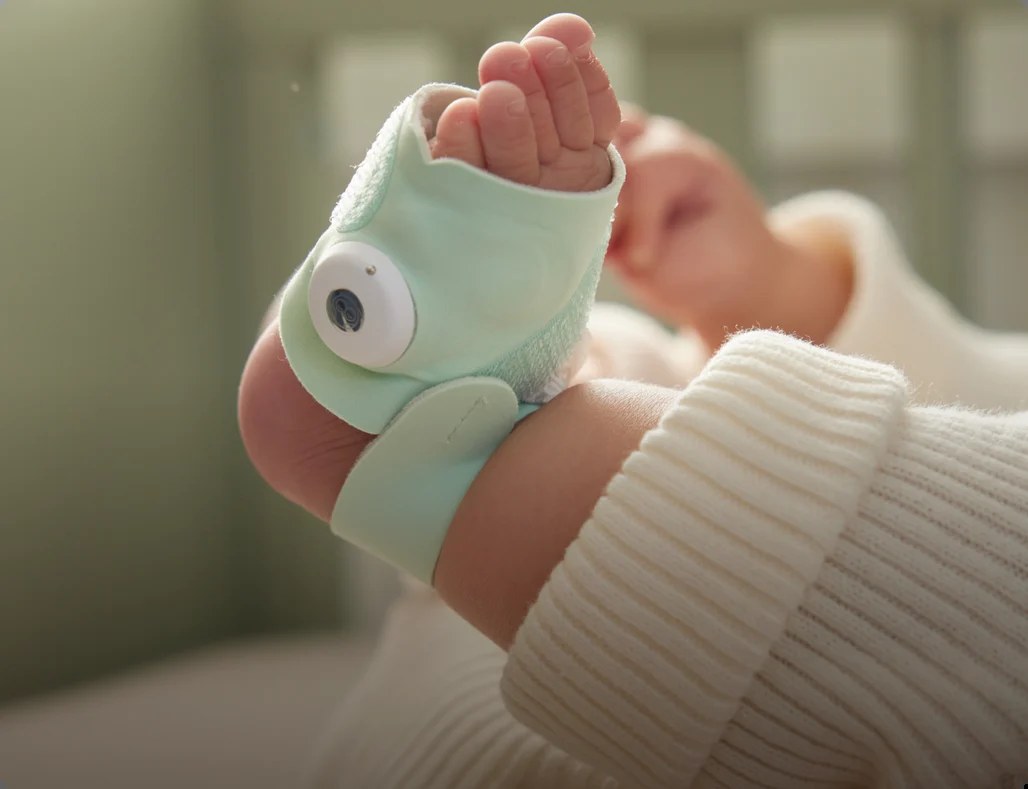
The home baby monitor from Masimo, the hospital pulse-oximetry company — this check pins the flagship consumer bundle, Stork Vitals+: a soft medical-grade silicone boot (small and medium included) holding a rechargeable Masimo SET® sensor, plus a 2K Quad High-Definition (QHD) camera with two-way audio, room-condition monitoring and 24 hours of video history, all run through the free Stork app. The sensor reads oxygen saturation (SpO2), pulse rate and skin temperature continuously, rated at 16 hours per charge with a 2-hour recharge. The sibling Stork Vitals bundle swaps the camera for a hub — same boot, same sensor, same app, same clearance. The system launched in August 2023 at $249–$549 across bundles and was originally sold as a non-medical wellness device (Masimo’s own launch releases say “not sold as a medical device”) before the FDA clearances arrived. Everything it does — live readings, trends, alarms, video — runs through the app and Masimo’s cloud; there is no standalone parent unit and no local mode.
Claims vs. reality
The FDA clearance is real — and narrower than the marketing. The consumer clearance (510(k) K234021, May 3, 2024) covers spot-checking and continuous monitoring of SpO2 and pulse rate, plus continuous skin temperature, in infants 0 to 18 months and 6 to 30 lbs at home, with visual and audible alarms when readings fall outside preset ranges. The label’s limits: it is for healthy infants only — “not intended for use with infants and neonates previously diagnosed with cardiovascular or respiratory disease or conditions”; it supplements a caregiver’s decision and is “not intended to replace the monitoring, diagnosis, or treatment provided by a physician”; and it is “not intended to provide notifications for every episode” — only when sufficient data are available. A separate prescription clearance (K223721, Dec 2023) covers healthy or sick babies when a clinician prescribes it. That is the same shape as the Owlet Dream Sock’s clearance, with one genuine Stork edge: Owlet starts at 1 month, Stork at 0 months. “Hospital-grade” SET® heritage: Masimo SET is real NICU technology (the brand cites 10 million+ babies monitored in hospitals yearly and a 1.5% ARMS SpO2 spec), but the FDA cleared this boot-and-app system for the narrow indication above — clearance is not a finding that a home boot equals a hospital monitor, and no independent lab accuracy test of the Stork boot was found. The face-down alert was never FDA-cleared (Masimo confirmed this to CNET), and units sold from the August 2023 launch until the summer 2024 app update had no cleared low-oxygen alarms at all — the gap behind the angriest owner reviews. “Skin temperature” is the temperature at the foot inside a silicone boot, not core temperature or a fever reading, and owners call it inaccurate.
Safety & recalls
No CPSC recall names Masimo or the Stork system (checked Nov 1, 2026) — do not confuse it with Stork Craft, an unrelated crib company whose recalls dominate “Stork recall” searches. The category guidance is the AAP’s: its 2022 safe-sleep policy states, as an A-level recommendation, “Do not use home cardiorespiratory monitors as a strategy to reduce the risk of SIDS” — such monitoring has not been documented to decrease the incidence of SIDS, and there are no data that commercial vital-sign devices reduce that risk. Stated plainly: no home monitor, this one included, prevents SIDS, and a clearance to measure SpO2 and pulse rate is not a clearance to prevent anything. The product-specific safety fact is now simpler: Masimo has discontinued the line and the app the system cannot function without has been shut down (see Price & FSA/HSA) — a monitor that no longer monitors is not a safety device at any price, and leftover units should not be handed down, resold or relied on.
Real reviews — what owners say
The owner record is thin, split and closed: the Android app drew only ~1,400 installs, and the iOS app sits at 2.7/5 across 28 ratings. Across the retailer pools (Best Buy, Tanga, and syndicated Amazon reviews), the praise is consistent: the boot is soft and well made, setup is easy, the camera is sharp, and the readings gave first-time parents — including NICU nurses who recognized Masimo from work — real peace of mind. The complaints match it point for point: the sensor loses its reading when the baby kicks or moves (a Best Buy reviewer who called the readings “very accurate” returned it for exactly this); the app cannot silence or acknowledge a poor-signal alert, so it repeats while you fix the boot; there is no overnight events summary — owners scroll minute by minute; alarm thresholds are preset, not customizable; and skin temperature reads inaccurately. Several glowing reviews are incentivized (Best Buy flags promo consideration on at least one), and no BabyGearLab or Mommyhood101 lab test was found. The independent tester who covered the category hands-on concluded the Stork was a good monitor that did not fail on quality — it was orphaned when its maker exited the consumer business, “which is exactly why it’s useless now.”
Price & FSA/HSA
$449.00 is the asking price for Vitals+ at the retailers still listing it in stock (Albee Baby; Buttercup Baby Co., low stock), down from the $549 launch list — and stranded: Crate & Barrel lists it as no longer available, the $349.99/$299 Stork Vitals bundle is out of stock at Target and Best Buy, Masimo’s own shop sells no bundles, and clearance channels that sold Vitals at $99–$174.99 are sold out. None of the prices matter, because Masimo discontinued the Stork line and shut the system down: retailer listings carry “(Discontinued)” in the product title, the Android app was removed from Google Play on Jun 19, 2026 (its last update was Jul 22, 2024), and an October 2026 report states Masimo customer service confirmed the app stopped working entirely after June 30, 2026 and the device cannot function without it — readings, alarms, trends and camera all run through it. The comparison frame: the still-supported Owlet Dream Sock lists at $299.99 with a live app and the same-shaped FDA clearance. FSA/HSA: retailer listings marked the Stork “HSA/FSA eligible,” consistent with its status as an FDA-cleared pulse oximeter (the same basis as the Dream Sock) — but no Masimo-published eligibility statement was found, and the point is moot: eligibility cannot rescue a system that no longer functions, and no verified refund remedy exists for owners (the written warranty is one year on hardware and excludes software).
The FDA clearance was real — Masimo SET pulse oximetry cleared for healthy infants 0–18 months — but Masimo discontinued the Stork, its Android app was pulled in June 2026 and the app the whole system runs through was reported shut off after June 30, 2026, so the $449 Vitals+ still on shelves cannot monitor anything. Not Worth It