
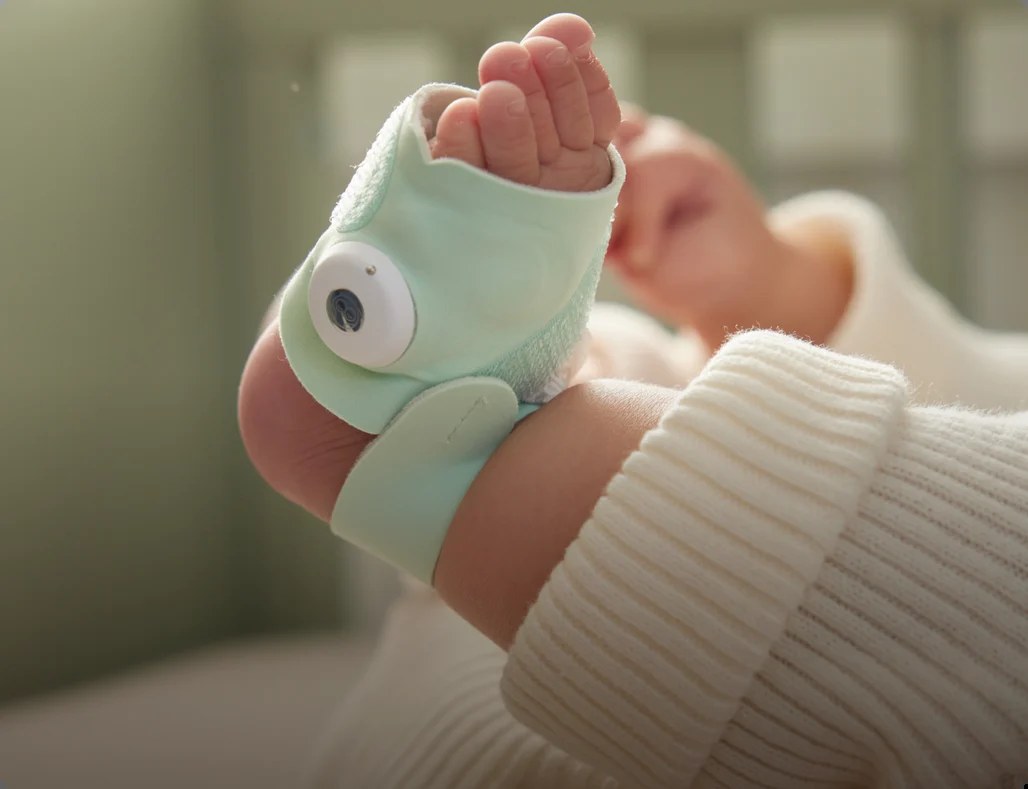
 Dream Sock in Mint — a fabric sock with a pulse-ox sensor, worn on the foot
Wearable baby health monitor
Owlet Dream Sock
Worth it if nighttime anxiety about breathing is what's actually costing you sleep — and your baby is in the 6–30 lb window.
See current price ↗Fit
healthy infants 1–18 months · 6–30 lbs
Tracks
live pulse rate & oxygen — no camera, no audio
FSA/HSA
eligible — sold as 100% eligible through HSA/FSA stores
Claim vs. reality — the clearance is real
“FDA-cleared” pulse and oxygen tracking for your baby — as the listing presents it
The headline claim holds up. The Dream Sock holds FDA De Novo clearance as an over-the-counter Class II pulse oximeter for healthy infants 1–18 months (6–30 lbs) — the first of its kind. Owlet cites accuracy within ±3% of arterial blood-gas readings across skin tones in clinical testing. It tracks live pulse rate and oxygen and alerts through the base station and app when readings leave preset ranges.
What it is not — read this part twice
- No monitor has been shown to prevent SIDS — this one included
- The AAP does not recommend home physiologic monitors as a SIDS-reduction strategy, or as a substitute for safe-sleep practices
- It measures and alerts — it does not prevent anything. Flat, on the back, bare crib: that’s still the safety plan
The brand history, plainly
- The predecessor Smart Sock was pulled from the US market in November 2021, after an FDA warning letter said it was being sold as a medical device without clearance
- The Dream Sock is the cleared redo — the same idea, taken through the FDA this time
- That episode was an FDA marketing action, not a safety recall — and there is no CPSC recall for the Dream Sock
The complaint pattern — alert noise
- The dominant complaint is alert noise: alerts for a slipped or moved sock — the “can’t get a reading” class — rather than true health alerts
- Worst at the smallest sizes and with wiggly older babies; it tapers as fit improves
- Also: base-station range limits, and the socks are hand-wash only
- The counter-signal: many anxious first-time parents say they sleep measurably better anyway
What you pay — and what you don’t get
No subscription needed for the core: live readings, health notifications, and basic trends are free. Owlet360 ($9.99/mo or $99.99/yr) adds trend and morning reports — optional, unlike camera paywalls that gate core features.
The Sock alone has no camera and no audio — if you want eyes and ears too, the Dream Duo bundle (Sock + camera) runs $379.99.
FSA/HSA: eligible — sold as 100% eligible through HSA/FSA stores.
Sources: FDA De Novo clearance record (over-the-counter Class II pulse oximeter, healthy infants 1–18 months, 6–30 lbs) · Owlet clinical accuracy claims (±3% of arterial blood-gas readings, across skin tones) · AAP guidance on home physiologic monitors and SIDS · FDA warning letter to Owlet (2021) and the Smart Sock’s US market withdrawal (November 2021) · CPSC recall database (no recall for the Dream Sock) · owletcare.com (Dream Sock $299.99 list; Dream Duo $379.99; Owlet360 $9.99/mo or $99.99/yr) · HSA/FSA store listings (100% eligible). A proactive library check — not a beta request — checked October 15, 2026. Some links on this page may earn WorthItMama an affiliate commission — it never changes the answer.
Worth it if nighttime anxiety about breathing is what’s actually costing you sleep and your baby is in the 6–30 lb window — knowing it measures and alerts, while safe sleep does the real work. Not worth it if you mainly need eyes and ears on the baby (get a camera monitor), if alert noise will wreck your sleep more than worry does, or if your baby is nearly out of the size window.