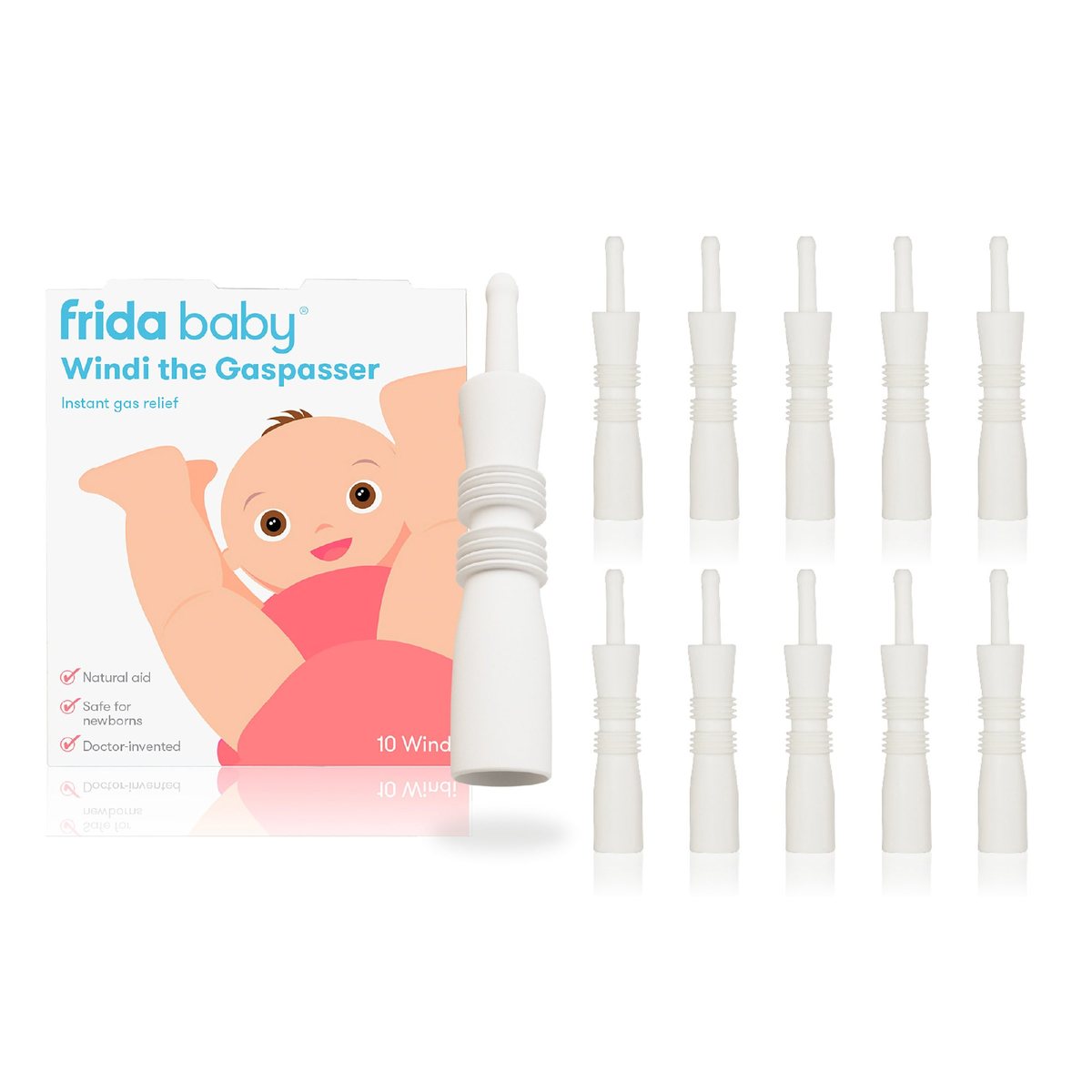
 The Windi 10-count box (brand photo)
Health & Home · Check #292
Is the Frida Baby Windi the Gaspasser (10-count) worth it?
Frida Baby Windi the Gaspasser (10-count)
It really does release gas — a lubricated rectal catheter that relaxes the sphincter and whistles as gas escapes, and owners confirm it works in seconds — but the UK MHRA advised in August 2026 against using this entire device class in infants (insufficient evidence, risks unknown), and pediatric guidance restricts rectal stimulation to rare use at most.
See current price ↗The pitch
Invented by a pediatric gastroenterologist, a drug-free hollow tube that instantly relieves gas and calms colic with no drops or medicine — a stopper so you can’t insert too far, a soft rounded tip, BPA- and latex-free, single-use and sanitary, 10 to a box
The catch
It is rectal stimulation, sold for home use — the technique pediatric guidance restricts (for dyschezia: avoid it, because it can interfere with learning to pass stool unaided) and Frida itself caps at 3 uses a day; in August 2026 the UK MHRA advised against all personal-use rectal catheters in infants and said to dispose of unused ones
FSA/HSA
eligible — sold as FSA/HSA eligible by FSA Store, HSA Store and Target; your plan administrator makes the final call
What it is
A box of 10 single-use rectal catheters for infant gas — soft, pliable, hollow tubes (medical-grade TPE, BPA- and latex-free) with a rounded tip and a wide stopper flange. No medicine, nothing ingested. Frida’s own steps state the mechanism plainly: massage the belly downward toward the rectum, lubricate the tip, lift the baby’s legs with a diaper ready underneath, insert the tip into the rectum until the stopper sits against the baby’s bottom, and listen — gas passing through the hollow tube whistles, usually within a few seconds. Then discard the tube. Frida’s own copy makes the comparison: most pediatric professionals know the rectal-thermometer method for relieving gas, and “the Windi is designed specifically for this purpose” — a purpose-built version of rectal stimulation, with a depth stopper a thermometer does not have. Retailer listings mark it 0+ months; at $12.99 for 10, each use costs $1.30.
Claims vs. reality
“Instant relief”: the mechanism is real and, when it works, fast — the tube passes the anal sphincter, stimulates it to relax, and gives trapped gas a hollow passage out; owners report release within seconds. But the relief is the mechanical event itself: nothing treats why the gas built up, a consistent minority of owners get no result at all, and the UK MHRA’s August 2026 review of this device class found insufficient clinical evidence to demonstrate effectiveness. “Cannot harm your baby if used as instructed”: not supported. The MHRA records no confirmed serious injuries, but it also states the potential risks are unknown — neither Frida’s certainty nor proven danger is what the record shows. The stopper: real and verified — the flange limits insertion depth, the tip is soft and rounded, the manual says stop if there is resistance and never force it, and single-use is a genuine hygiene feature (the manual warns reuse may risk infection). Frequency: Frida’s own manual caps use at three times in 24 hours, warning more may interfere with the baby’s natural ability to pass gas. Pediatric guidance on the underlying technique is tighter: for infant dyschezia (straining before a soft stool — the pattern that looks like painful gas), Children’s Minnesota and Alberta Health Services say avoid rectal stimulation, because it can interfere with the baby learning to coordinate passing stool; a US practice that describes thermometer stimulation at all caps it at once a week.
Safety & recalls
No CPSC recall and no FDA record names the Windi (checked Nov 1, 2026). Do not conflate it with other Frida news: the 2024–2025 prep-tool injury coverage concerned the separate 3-in-1 Nose, Nail + Ear Picker, and Health Canada’s 2026 Frida recall was a water-filled teether — different products. What does name this device class precisely is the UK MHRA Device Safety Information DSI/2026/008 (Aug 18, 2026): all brands of stoppered, single-use rectal catheters sold for gas and colic relief — do not use in infants, stop using immediately and dispose of unused devices — citing insufficient evidence of effectiveness and unknown risks, including rectal trauma, perforation, bleeding and pain, infection, and masking serious conditions such as bowel obstruction or volvulus. The MHRA also states there have been no confirmed reports of serious injury. That is a UK regulator’s position, not a US recall, and the Windi remains on sale in the US. Frida’s own warnings: do not leave the Windi in the rectum; if resistance is felt, remove it; do not reuse; no more than three uses in 24 hours; seek medical care for redness, irritation or bleeding.
Real reviews — what owners say
Target: 4.6/5 across 1,595 ratings and 754 reviews; Babylist: 4.5/5 across 186 ratings (82% five-star, 8% one-star); Walmart shows 307 reviews with the same shape. The success pattern is specific and repeated: massage and bicycle legs first, lubricate, insert — an audible release of gas, very often followed immediately by stool, a softening belly, and a baby who relaxes or falls asleep. Frida’s warning to have a diaper ready because “it could get messy” is corroborated: stool following the gas is the norm in reports. The counter-patterns: a minority get no gas and no result at all; Target’s review summary flags owner concerns about potential reliance on the product; Walmart’s summary lists the cost as relatively expensive; and some owners report using it up to the brand’s three-a-day maximum as a routine. What no owner pool can establish is how many of those episodes would have resolved with the massage, the leg lifts and a few minutes — the gap behind the MHRA’s evidence finding.
Price & FSA/HSA
$12.99 for 10 at frida.com and Amazon ($1.30 per use); $12.79 at Target ($1.28 per use); the 20-count at Frida is $24.99 ($1.25 per use — a five-cent-per-tube saving). HSA Store lists the same 10-count at $19.99, a $7 markup over the brand price. At Frida’s own maximum of three uses a day, a box lasts just over three days at about $3.90 a day; used occasionally, it lasts weeks — the only pattern in which $1.30 per use is a minor line item. The Windi is sold as FSA/HSA eligible: FSA Store and HSA Store list the 10-count as eligible, Target marks the listing FSA/HSA eligible, and the eligibility service Silver classes it as eligible under baby gas and constipation relief on its reading of IRS Publication 502 — since the CARES Act, over-the-counter medical products need no prescription for reimbursement. Eligibility is ultimately set by each plan administrator, and no source retrieved names the Windi in the IRS text itself.
It really does release gas — a lubricated rectal catheter that relaxes the sphincter and whistles as gas escapes, and owners confirm it works in seconds — but the UK MHRA advised in August 2026 against using this entire device class in infants (insufficient evidence, risks unknown), and pediatric guidance restricts rectal stimulation to rare use at most. Not Worth It