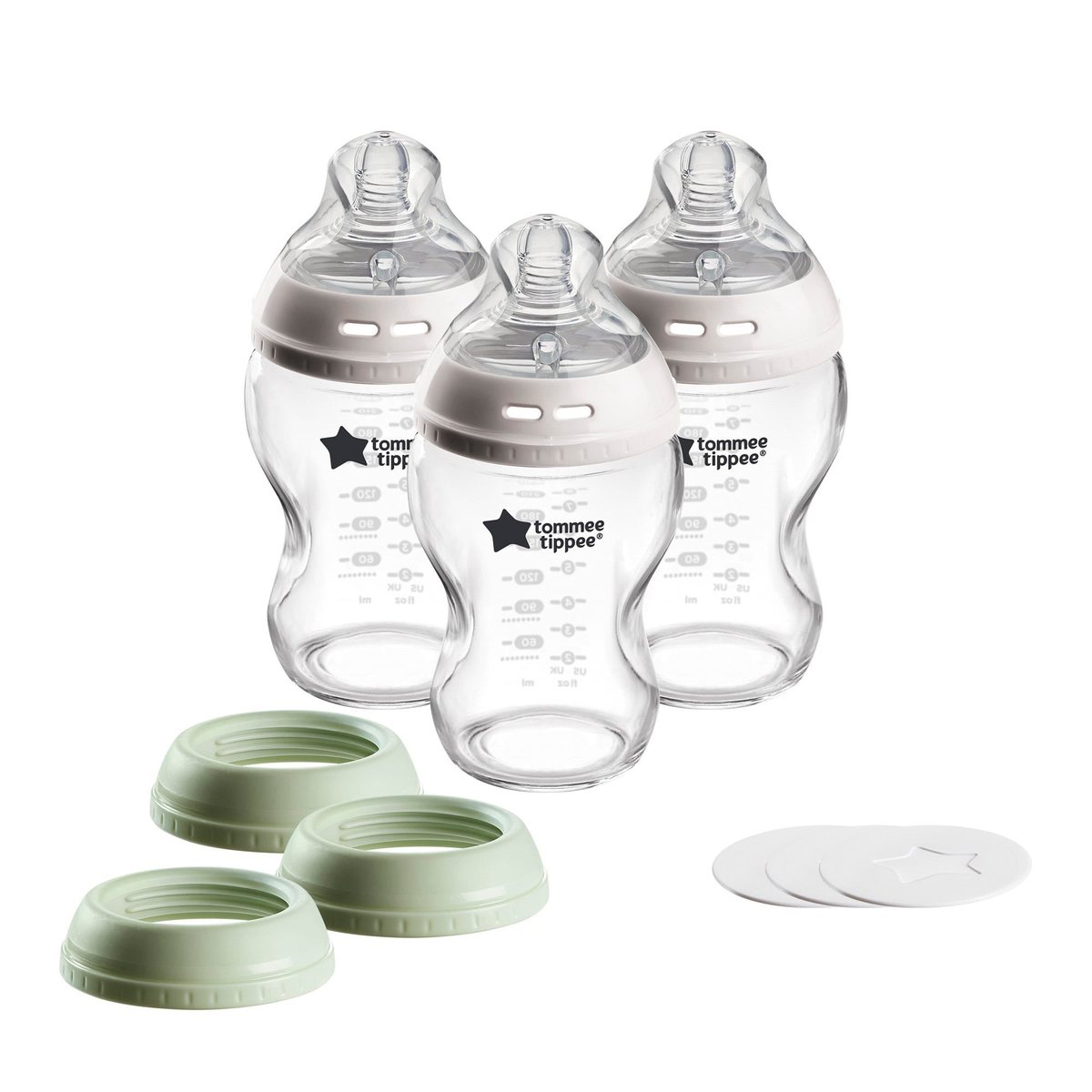
 The 3-in-1 glass bottle set (brand photo)
Feeding & Pumping · Check #286
Is the Tommee Tippee Glass Bottles worth it?
Tommee Tippee Closer to Nature Glass Baby Bottles
Real borosilicate glass and a genuinely slow-tested nipple in a 3-pack that converts to jars and cups for $22.49 on sale — but the “95% accepted” claim rests on the brand's own surveys of existing users, the anti-colic valve is a basic nipple vent that can leak if mis-threaded, and the glass can shatter on a short drop.
See current price ↗The pitch
Borosilicate glass bottles with a breast-like, slow-flow nipple and built-in anti-colic valve, self-sterilising in the microwave in 3 minutes — and each bottle converts to a food jar and then an open cup, for $22.49/3-pack on sale
The catch
The “95% of babies accept it” headline traces to brand-run surveys of parents already using the nipple (older packaging: 92% of 1,200+ recalled acceptance within 3 attempts); the vent is a simple nipple slit valve owners say leaks unless the ring threads perfectly, and the glass shattered in at least one owner’s one-foot toddler drop; no freezer use
FSA/HSA
not eligible — feeding bottles are not a qualified medical expense; breast pumps and lactation supplies are
What it is
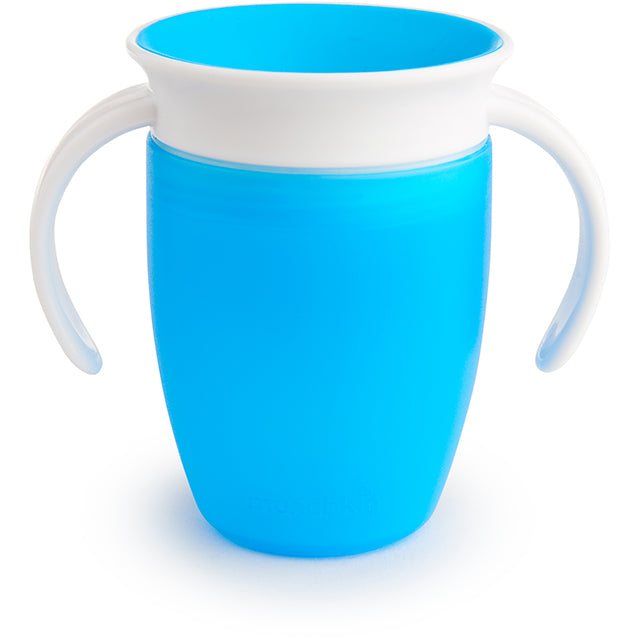
The glass version of Tommee Tippee’s wide-neck, breast-shaped-nipple bottle line — sold in the US first as Closer to Nature and now as Natural Start, same set. The configuration checked is the 3-pack of 9 oz (260 ml) glass bottles, model 549508: three self-sterilizing glass bottles, three slow-flow (Size 1, 0m+) breast-like silicone nipples, three travel food jar lids and three cup rings, so each bottle converts from baby bottle to lidded food jar to open cup. The bottle body is borosilicate glass; the nipple, ring and lids are silicone and polypropylene. The trend behind it is real: Babylist’s 2026 Most Loved survey (6,700 parents) found half of parents (50%) now prefer glass bottles over plastic, up nine points from 2025. Against the library’s bottle field — Philips Avent Glass, Dr. Brown’s Options+ glass, Comotomo, MAM and Evenflo Balance+ — this is the budget glass entry, at roughly $7.50 a bottle on sale.
Claims vs. reality
“Breast-like nipple, shaped like a breast, feels like mom”: the wide, rounded silicone nipple with a broad latch area is real, and many owners report easy latching — but “most breast-like, ever” is a slogan, not a measurement, and even in Target’s promotion-heavy pool one reviewer’s baby never took the nipple at all. “95% of babies accept a Tommee Tippee bottle”: the current page publishes no sample size or method, only a pointer to the brand’s verify page. The bases printed on earlier packaging are brand-run surveys of parents already using the nipple — the glass pack’s own older footnote reads “92% of more than 1200 parents… recalled that they accepted it within the first 3 attempts,” and a sibling listing cites a 2012 online survey of 500+ moms. Self-selected users remembering acceptance is not a 95% promise for your baby. Anti-colic valve: this set’s venting is a slit valve in the nipple that lets air into the bottle as baby drinks — a standard nipple vent, not the Advanced Anti-Colic vented-wand system it is constantly listed beside. The manual says to pinch the valve open before feeding; owners report the vent leaks unless the ring lands on exactly the right thread, and the box’s “100% leakproof” applies with the travel lid on, not while feeding. Slow flow: the honest bright spot — independent bench testing (Pados et al., 2016) measured the earlier-generation Tommee Tippee Slow Flow at 8.57 mL/min with low variability (CV 0.09), under the study’s 10 mL/min “truly slow” line, though the slowest nipple tested ran 1.68 mL/min and an Extra Slow Size 0 is sold separately. The glass: borosilicate, thermal-shock resistant, with manual rules that matter — dishwasher top shelf only, 30 minutes to cool after microwave sterilising, and not suitable for freezing.
Safety & recalls
No CPSC recall names the Tommee Tippee glass bottles, Closer to Nature bottles or Natural Start bottles (checked Nov 1, 2026). Two brand recalls exist and are different products: in June 2016 Mayborn USA recalled about 255,000 Closer to Nature electric bottle and food warmers (CPSC 16-199) for overheating and fire — an accessory, not the bottles — and Sippee cups were recalled the same year over mold in a removable valve. The safety substance here is the manual: glass bottles may break, so check for damage before every use and do not use if damaged; never freeze them; keep the bottle hood from children; replace nipples every two months or at the first sign of damage. Target’s listing data rates the set as meeting CPSC and ASTM standards. This is general product information, not medical advice.
Real reviews — what owners say
Target rates this exact kit 4.8/5 across 78 ratings and 72 reviews — but a large share of the readable reviews are syndicated from the brand’s site and stamped “collected as part of a promotion,” so treat the 4.8 as promotion-skewed. The pattern inside is consistent: owners praise the wide neck (easy to fill and clean), the sturdy glass that doesn’t hold odors or film, the 3-minute microwave self-sterilising, and the bottle-to-jar-to-cup second life; several bought it specifically to avoid heating milk in plastic. The complaints repeat too: the vent leaks unless the ring threads perfectly, newer rings are harder to screw on and don’t fit older bottles well, the bottles are on the heavy side, and one reviewer’s bottle completely shattered when her toddler dropped it from about a foot — while other owners report drops survived. No BabyGearLab or Mommyhood101 lab test of this glass set was found.
Price & FSA/HSA
$22.49 at Target for the 3-pack (3 × 9 oz glass bottles, slow-flow nipples, jar lids and cup rings, model 549508) at the sale price in most listings read Nov 1, 2026 — other listings in the same window showed $17.99, and list is $27.99 (about $9.33 a bottle). The brand’s own US store showed the set unavailable during this check. It undercuts Philips Avent Glass and Dr. Brown’s glass sets while adding the jar/cup conversion, and the plastic version of the same bottle runs about $15.19/3-pack at Target — a glass premium of roughly $7 a set. Nipples are a recurring cost on any bottle: the brand advises replacing them every two months (~$5/2-pack). Baby bottles for feeding are not FSA/HSA eligible — IRS Publication 502 covers breast pumps and supplies that assist lactation, but a feeding bottle is a general feeding item, not a medical expense, and the “medical-grade glass” framing changes nothing.
Real borosilicate glass and a genuinely slow-tested nipple in a 3-pack that converts to jars and cups for $22.49 on sale — but the “95% accepted” claim rests on the brand’s own surveys of existing users, the anti-colic valve is a basic nipple vent that can leak if mis-threaded, and the glass can shatter on a short drop. Worth It If…