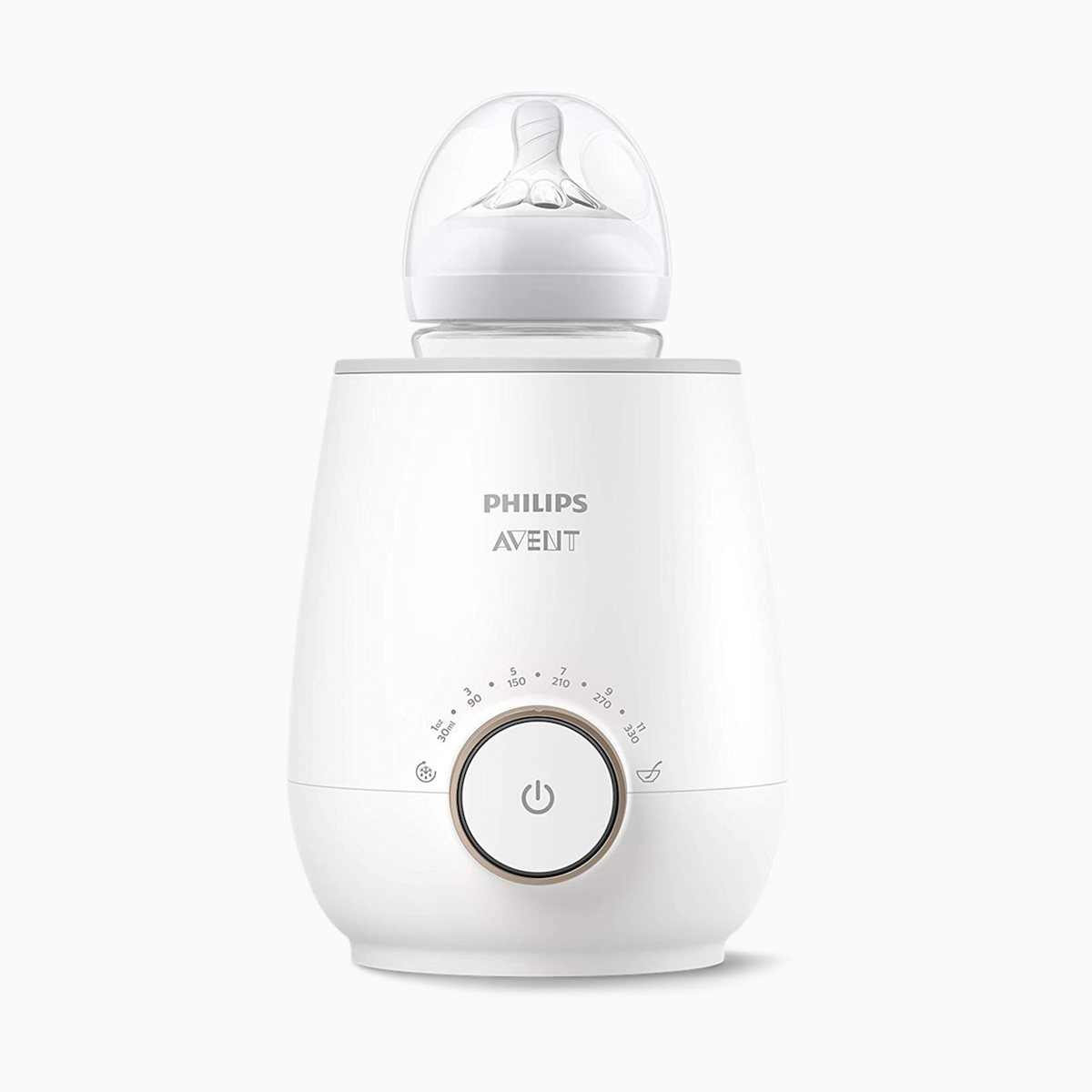
 The SCF358 Fast Bottle Warmer (brand photo)
Feeding & Pumping · Check #294
Is the Philips Avent Fast Bottle Warmer worth it?
Philips Avent Fast Bottle Warmer
The fastest warmer BabyGearLab tested, and the best-known name in a category Babylist's 2026 parents just put on the “out” list — but its “smart temperature control” scored 3.0/10 for health and safety, with milk measured at 121.6°F, a 22-degree spread on identical settings, and owners split between scorched and still-cold bottles.
See current price ↗The pitch
Smart temperature control that warms a 5 oz bottle in as little as 3 minutes with no hot spots or overheating, keeps it warm for up to 60 minutes then shuts itself off, and defrosts frozen milk and warms baby food jars — from the best-known name in bottles
The catch
The “3 minutes” is a room-temperature 5 oz bottle in Philips’ own Natural bottle; fridge, frozen, large and silicone bottles take far longer (defrosting 60 ml of frozen milk is a 45-minute manual example), the “no overheating” promise fails its tests, and it needs vinegar descaling every four weeks
FSA/HSA
not eligible — a warmer does not assist lactation under IRS rules, and baby bottles and feeding accessories are not qualified medical expenses
What it is
A countertop water-bath bottle warmer — the current US model is the Premium Fast Bottle Warmer, SCF358/00 — about 6.31 × 5.51 × 5.85 in, with a single volume dial (30 ml / 1 oz to 330 ml / 11 oz), a three-segment progress light, and no temperature display and no audible beep: the light ring is the only “ready” signal. Per the manual, you fill with water to the level of the milk, the bath never reaches boiling, a sensor tracks temperature, and the milk lands at approximately body temperature before the unit holds it warm for about 60 minutes and switches off. It also defrosts frozen milk and milk bags and warms baby food jars. The frame for this check: Babylist’s 2026 Most Loved survey of 6,700 parents put bottle warmers on the “Out” list and named warmers frequent registry regrets — so the question is whether the best-known warmer beats its category’s verdict.
Claims vs. reality
“Ready in as little as 3 minutes”: Philips’ own footnote limits that to 150 ml / 5 oz of milk at 22°C / 72°F in a 260 ml / 9 oz Philips Natural bottle — room temperature, mid-size, its own bottle. Silicone bottles add 3–4 minutes on Philips’ own copy; BabyGearLab, following the manufacturer’s directions, measured 4.5 minutes to 80°F and an average of 6.5 minutes to 98°F, and the manual’s defrost example is 45 minutes for 60 ml of frozen milk. It is genuinely the fastest warmer in BabyGearLab’s test (Warming Time 8.5) — just not 3 minutes for the fridge bottle you bought it for. “Smart temperature control / no overheating”: the claim that fails. There is no thermostat setting or readout — the control is a volume-programmed bath cycle plus a sensor — and BabyGearLab scored Health and Safety 3.0/10: a maximum observed 121.6°F, contents crossing 104°F (where breast-milk nutrients begin to degrade) near 7 minutes, an explicit overheating warning for the keep-warm feature, and results ranging 76–98°F on identical settings. Defrost and food jars: real but bounded — defrost covers only 30–180 ml of milk, frozen food must be defrosted and then re-run on the separate food setting, stirring as you go. Keep-warm: the ~60 minutes includes warming time; the CDC allows warmed milk within 2 hours and the manual itself warns not to rewarm cooled milk because bacteria may develop — and the CDC notes milk can be served cold or at room temperature and warmed in a bowl of warm water. Compatibility: the 78 mm opening fits all Philips Avent bottles except the 2 oz / 60 ml size, Dr. Brown’s narrow bottles, Comotomo and Nanobébé silicone — but not Nanobébé breastmilk bottles, likely not extra-wide heorshe bottles, and Dr. Brown’s wide-neck may not fit upright.
Safety & recalls
No CPSC recall names Philips Avent, the Fast Bottle Warmer or the SCF358 (checked Nov 1, 2026). Read that next to the documented temperature record: BabyGearLab’s measured 121.6°F maximum and keep-warm overheating warning, and a ClassAction.org attorney investigation (an investigation, not a recall or a judgment) collecting owner complaints of bottles too hot and too cold despite the “smart temperature control” advertising. The manual’s own warnings are standard water-bath hazards taken literally: hot water can cause serious burns, surfaces stay hot after use, never preheat, add water before switching on, warm only a fully assembled capped bottle — and there is no bottle basket, so you lift a hot, wet bottle out of hot water by hand. The milk rules that bound the keep-warm feature (CDC): use warmed milk within 2 hours, leftovers within 2 hours after a feed ends, never microwave, never refreeze thawed milk; swirl and test on your wrist — warm, not hot.
Real reviews — what owners say
Large and sharply polarized. Philips’ own US store: 4.0/5 across 160 reviews. Target: 3.6/5 across 782 ratings. Babylist Shop: 3.8/5 across 242 ratings — 52% five-star, 19% one-star. BabyGearLab (57 overall, #8 of 11) concludes it suits parents who will monitor it, not parents who may be distracted. The dominant complaint is inconsistency in both directions — “sometimes the bottle is still cold and sometimes it’s boiling” (Babylist) — with self-reported owner readings of 117–140°F alongside bottles still cold at the solid “ready” light, and settings that work for weeks then scorch. Glass warms faster than plastic, plastic faster than silicone, so mixed-bottle households re-learn the dial per bottle. Scale is structural: the manual requires descaling every four weeks (60 ml white vinegar + 120 ml cold water, run 10 minutes), BabyGearLab scored cleaning 5.4 and notes spilled milk that reaches the heating element cannot be reached to clean, and owners report units that barely heat after a few months — consistent with skipped descaling. Add a small-but-permanent counter footprint and no audible ready signal owners say is easy to miss over a crying baby.
Price & FSA/HSA
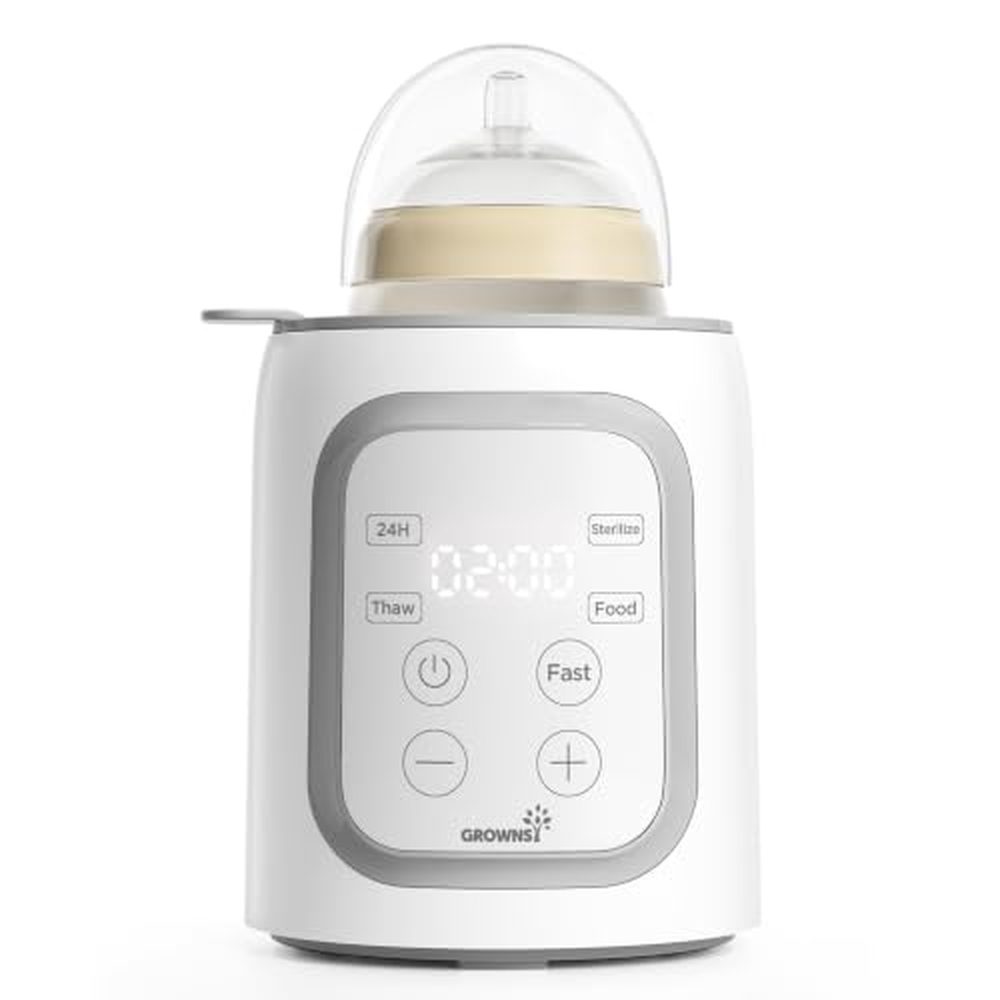
$49.95 list at Philips Avent US and Kohl’s; $49.99 at Babylist and Target (Nov 1, 2026) — BabyGearLab likewise lists $50 and calls the price average for the category. The comparison that matters is the $0 alternative the CDC itself describes: a bowl of warm water or warm running water, for milk that does not need warming at all. The library’s other checked warmers (Grownsy 8-in-1, Momcozy Smart, Baby’s Brew Portable Pro) at least add travel or extra functions for their compromises; this one buys monitored speed at home. Not FSA/HSA eligible — IRS Publication 502 covers breast pumps and supplies that assist lactation; a warmer does not assist lactation, and FSA/HSA eligibility lists state baby bottles are not eligible expenses. No FSA Store listing for this warmer was found; do not buy it expecting reimbursement.
The fastest warmer BabyGearLab tested, and the best-known name in a category Babylist’s 2026 parents just put on the “out” list — but its “smart temperature control” scored 3.0/10 for health and safety, with milk measured at 121.6°F, a 22-degree spread on identical settings, and owners split between scorched and still-cold bottles. Not Worth It