
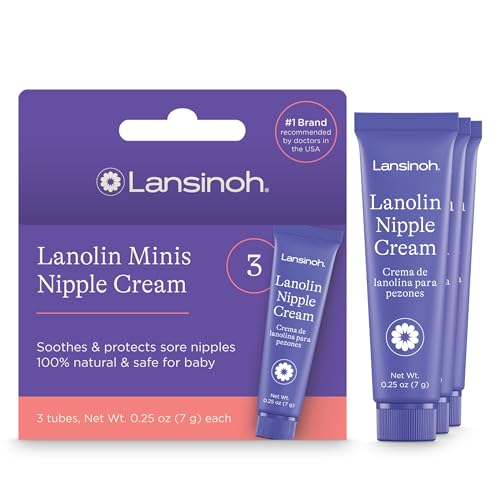
 Lansinoh Lanolin Minis (3 × 0.25 oz) — Amazon listing photo via pricehistory.app
Feeding & Pumping · Check #161 — Batch 12
Lansinoh Lanolin Nipple Cream — 3× 0.25 oz Minis
Worth It If…$10.99 at Amazon — 3 mini tubes, 0.25 oz (7 g) each, 0.75 oz total, ASIN B00FNZQHJA, model 10232 (list price confirmed at Lansinoh direct; a later Amazon scrape showed $22 — do not pay that, see Price note)
The cream verifies — single-ingredient ultra-purified lanolin, and no-need-to-remove is standard lactation guidance (LactMed: residues removed, free wool alcohols <1.5%) — but the minis charge ~2× per ounce for a three-location split, and lanolin has not consistently beaten breastmilk alone in trials.
See current price ↗The pitch
100% natural single-ingredient HPA lanolin, ultra-purified and hypoallergenic, safe for baby with no need to remove before breastfeeding, ethically sourced and certified climate neutral, helps moms breastfeed 25% longer
The catch
Minis are a convenience format at roughly double the per-ounce price of the full tube; “25% longer” is a self-reported brand study, not proof the cream causes it; climate neutral means measured-and-offset (DFGE/PAS 2060), not emissions-free; avoid with a wool allergy
FSA/HSA
Eligible — lanolin is on the HSA Store eligibility list for FSA/HSA/HRA reimbursement, and Babylist and Vitality Medical both flag this cream FSA/HSA eligible
What it is
The Lansinoh Lanolin Nipple Cream Minis (Amazon ASIN B00FNZQHJA, Lansinoh model 10232 — ASIN and model pinned from pricehistory.app’s Amazon product record; Amazon pages refuse agent reads, so price and ratings here come from independent records): three 0.25 oz (7 g) tubes, 0.75 oz total, of the same cream sold in the full 1.41 oz (40 g) tube (model 10020). The ingredient list is one line: 100% HPA modified lanolin, USP — lanolin is the wax sheep secrete into their wool, here ultra-purified. Directions, per Lansinoh: wash hands, soften a pea-sized amount between fingers, apply to the whole nipple after each feeding (apply after, not before, so it can absorb), and optionally before showering to shield sore nipples from water. A pea-sized amount is why 0.75 oz lasts longer than it looks — and why the format question below is about locations, not quantity. Not vegan (it is an animal-derived wool wax), and not a drug treatment for damaged or infected nipples.
Claims vs. reality
- “Safe for baby — no need to remove before feeding”: verifies, and it is not just brand copy. The LactMed summary (via Drugs.com/NCBI) states that highly purified lanolin products such as Lansinoh have pesticide and detergent residues removed and natural free wool alcohols reduced to below 1.5% to improve safety and lower allergic potential, and Lansinoh’s own sell-sheet analysis put its free lanolin alcohols at 0.79% with no detectable pesticide residues, the lowest of the lanolins tested. No preservatives, parabens, fragrance or taste are added. That is the basis for leaving a thin layer on — apply after feeds, in pea-sized amounts, not a thick coat before a feed.
- “Soothes and heals sore, cracked nipples”: half-verified. Lanolin is a barrier/moist-wound-healing ointment — it keeps moisture in so skin can rehydrate without a scab. But the LactMed evidence summary is blunt: studies (most using Lansinoh) have not found lanolin consistently different from expressed breastmilk, hydrogel dressings, peppermint gel, aloe vera or warm compresses; one meta-analysis concluded nothing, or breastmilk alone, may be superior, while good studies are lacking; a more recent meta-analysis of controlled trials found lanolin superior to routine care, and one 180-mother randomized trial found Lansinoh superior to breastmilk over 7 days for pain and trauma scores. Honest read: it helps many moms and harms few, but it is comfort care, not a proven cure — and persistent pain usually means a latch, pump-fit or infection problem a cream cannot fix.
- “Moms who use it breastfeed 25% longer”: brand-study framing. Lansinoh’s source is a UK study in which users self-reported breastfeeding an average of 6.7 weeks longer when lanolin was part of their normal routine. That is an association in people who sought and used a remedy — it does not show the cream itself extends breastfeeding, and it should not be read as a promise.
- “Ethically sourced, certified climate neutral”: the climate half has a real certificate behind it, with the usual asterisk. Lansinoh says HPA Lanolin is certified climate neutral by DFGE under PAS 2060 on a measure–reduce–offset basis — remaining lifecycle emissions are compensated, in its account through a certified water-treatment project in Cambodia. That is not the same as the product creating no emissions. “Ethically sourced” is the brand’s own wording with no farm-level standard named on the US product page (a rival, Medela Purelan, specifies mulesing-free farms; Lansinoh’s US page does not), and “never tested on animals / cruelty-free” is confirmed by Babylist — but the ingredient is still sheep-derived, so it is not vegan or plant-based.
- “Hypoallergenic”: reduced-allergen, not zero-risk. The purification cuts free wool alcohols below 1.5%, and the UK line carries British Allergy Foundation approval — but LactMed’s explicit caveat is that even highly purified lanolin should be avoided with a known wool allergy. Stop and get advice if redness, itching or a rash appears.
- The minis format itself: the only real product difference is packaging — three sealed 0.25 oz tubes to split across hospital bag, nightstand and changing bag instead of carrying one tube. That convenience is genuine (and a fresh mini is a cleaner gift/hospital-bag item), but you pay for it per ounce, below.
🛡 Safety & recalls
No CPSC recall for Lansinoh lanolin nipple cream was found on Oct 23, 2026 (the widely shared Lansinoh bottle-paint story is about baby bottles, a different product, and traces to a violation report, not a recall of this cream). Use it as directed: external use, clean hands, pea-sized amount after feeds. Three medical caveats matter more than the marketing: (1) wool/lanolin allergy — do not use it, even in this purified form (LactMed); (2) lanolin alone is not sufficient for a yeast (thrush) or bacterial nipple infection — pharmacy guidance for this exact product says to see a midwife, lactation consultant or doctor in that case, and a moist barrier over an untreated infection is not a treatment; (3) pain that persists, deepens, or comes with fever, a hot/red breast area, cracks that will not heal or a baby with white mouth patches is a clinical problem, not a sign to buy more cream. Practical warning owners repeat and the brand’s own retailers concede: lanolin grease-stains fabric — use nursing pads, and treat any stain as a grease stain (dish soap/pre-treater, hot soak) rather than a normal wash. It also hardens in the cold and softens in heat (the brand FAQ confirms this is normal for a preservative-free natural material; knead the tube, never microwave it). Information only, not medical advice.
Real reviews
Amazon: pricehistory.app scores this exact minis listing (ASIN B00FNZQHJA) 9.4/10 across 7,474 reviews in its product-detail record; the candidates-file pool for the wider lanolin listing is 9.6/10 across 60,115 reviews — different pools, not added together. For the same cream in the full tube, Babylist shows 4.6/5 across 3,946 ratings. Praise is consistent: a little goes a long way, it genuinely relieves early-weeks soreness for many users, no smell/taste for baby, and the leftovers get second lives as lip balm, cuticle cream and heel balm. Complaints, in order: (1) it is thick and sticky and can feel hard to spread (owners who warm it between fingers first report the best results — which is also the label direction); (2) grease stains on bras, tanks and pajamas; (3) it did not fix their pain — the evidence section above is why that complaint is predictable when the cause is latch or infection; (4) the minis run out / feel small for the money, which is the per-ounce math below.
Price & FSA/HSA
$10.99 list for 0.75 oz total — that is $14.65 per ounce. The same cream in the full 1.41 oz tube is $12.42 at Lansinoh direct ($8.81/oz), $11.92 at Babylist, and $9.49 in pricehistory.app’s Amazon record on Oct 22, 2026 ($6.73/oz). So the minis cost roughly two-thirds more per ounce than the brand’s own full tube, and about 2.2× the Amazon full-tube price — you are paying ~$5–$8 of the $10.99 for the three-location split, not for more cream. One volatility warning: pricehistory.app’s latest scrape of this ASIN (Oct 23, 2026) showed $22, double list, which reads as a third-party/reseller price when direct stock is thin — at $22 the minis make no sense at all; buy at $10.99 or buy the full tube. FSA/HSA: eligible — lanolin appears on the HSA Store eligibility list as reimbursable with an FSA, HSA or HRA (not a limited-purpose or dependent-care FSA), and both Babylist and Vitality Medical flag this cream FSA/HSA eligible; keep the receipt, as plan administrators vary.
Worth It If… you specifically want the cream split across hospital bag, nightstand and diaper bag, and you buy it at the $10.99 list price — because the cream itself checks out (single-ingredient ultra-purified lanolin; no need to remove before feeding is standard lactation guidance), but the minis cost $14.65/oz against $6.73–$8.81/oz for the same cream in the full 1.41 oz tube, the evidence that lanolin beats expressed breastmilk alone is mixed, and it will grease-stain a nursing bra.